How to Give Children Understanding to Do Good
20 August 2020 00:00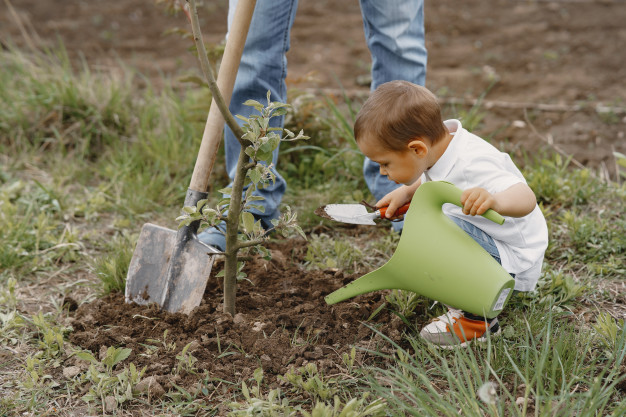
Every child is born unique with different characteristics and traits. A child with his characteristics has different teaching needs. The child's behavior is a reflection of the behavior of the people around him. Children will grow into good personalities if they are surrounded by a good environment too.
To give understanding to children, parents must adjust the method of delivery used with the child's condition. The natural qualities possessed by children are the main challenges in conveying understanding to children. Here are some ways to give good children's understanding to apply.
Speak softly and attentively
The first way you can give your child understanding is by speaking in a gentle and attentive manner. Your child is a new canvas that has not yet created a picture of what he will be like in the future. To produce a beautiful picture, a lot of effort needs to be made. Among other things, by speaking gently and attentively.
Just like canvas, your child needs to be treated gently, gently and with care so that his psychological development is not damaged. Make it a habit to give children understanding subtly, not in a tone that is harsh, tight, and tends to yell at children. If the child cannot be taught in one word, tell your child repeatedly but still subtly. However, if after being explained many times your child still doesn't understand, you can try other methods such as asking the children to reflect on the mistakes they have made. Children who are raised in a subtle way will produce a refined personality and have good behavior, on the other hand, a child who is raised roughly will grow into an abusive person.

Explain the reasons why doing good is necessary
The way to give children the understanding that doing good is important next is to explain the reasons. In order for children to understand to always do good, you must explain to children why it is important to do good. Explain to your child that doing good will result in something good. By doing good your child will get good feedback from others. Simply explain it in simple terms using examples that the child has experienced before.
You can also explain to your child that doing good is God's commandment in any religion. Doing good with others is to form human tolerance for one another. Teach them to uphold this principle, that doing good is God's request, so that they will always do good to others.
Be an example for children
The third way to give children understanding is by modeling good behaviors for children. Your child actually always imitates your behavior to be applied in his daily behavior. Therefore, make it a habit to display good behaviors in front of children so that children will always imitate your good deeds.
By presenting good behavior to children yourself, you indirectly give the child's understanding to always do good. The simple behaviors that you display every day have been consumed by the child and have become a habit in their daily life. For that, always try to stimulate children by displaying good behaviors.
Provide symbolization when explaining to children
The last way to give children understanding to always do good is by simplifying their understanding through symbolization. Children up to 6 years of age are at a developmental point where it is easy to understand when using symbols or parables with simpler things. Children's understanding of good deeds can be further developed through explanations with symbols.
To ensure that children's understanding develops, you need to create a supportive environment for your child. One of the environments that supports the development of your child's understanding is an inclusive school. Inclusive schools offer different teaching from schools in general and provide a more varied learning experience for children. Inclusive schools have a teaching and learning structure based on the talents, interests and potential of children, so that in teaching, how to give understanding to children can be easily absorbed by each child. Please visit this site for information regarding inclusive schools.